Select your language from the drop down menu.


Published: 11 June 2026.
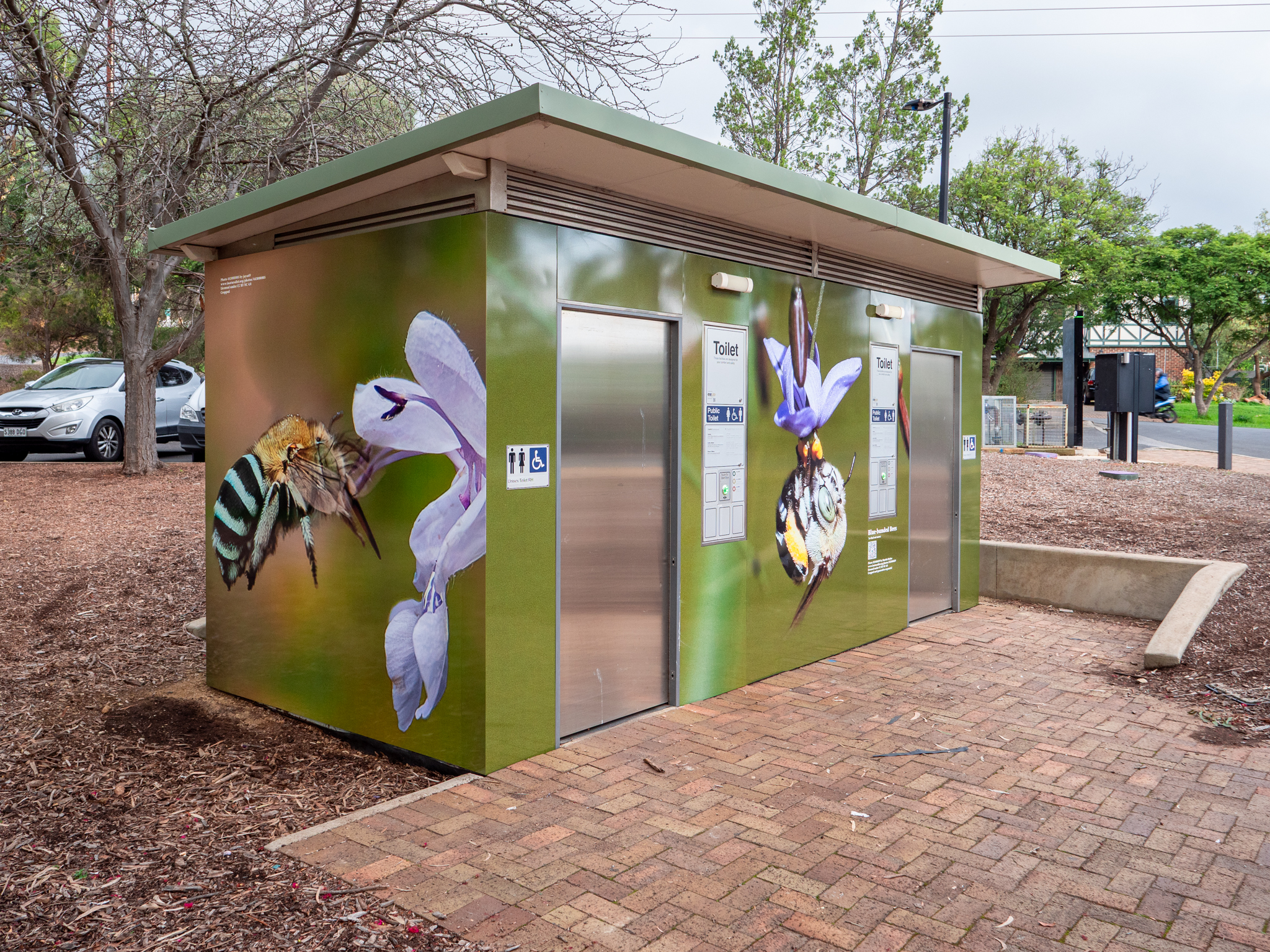
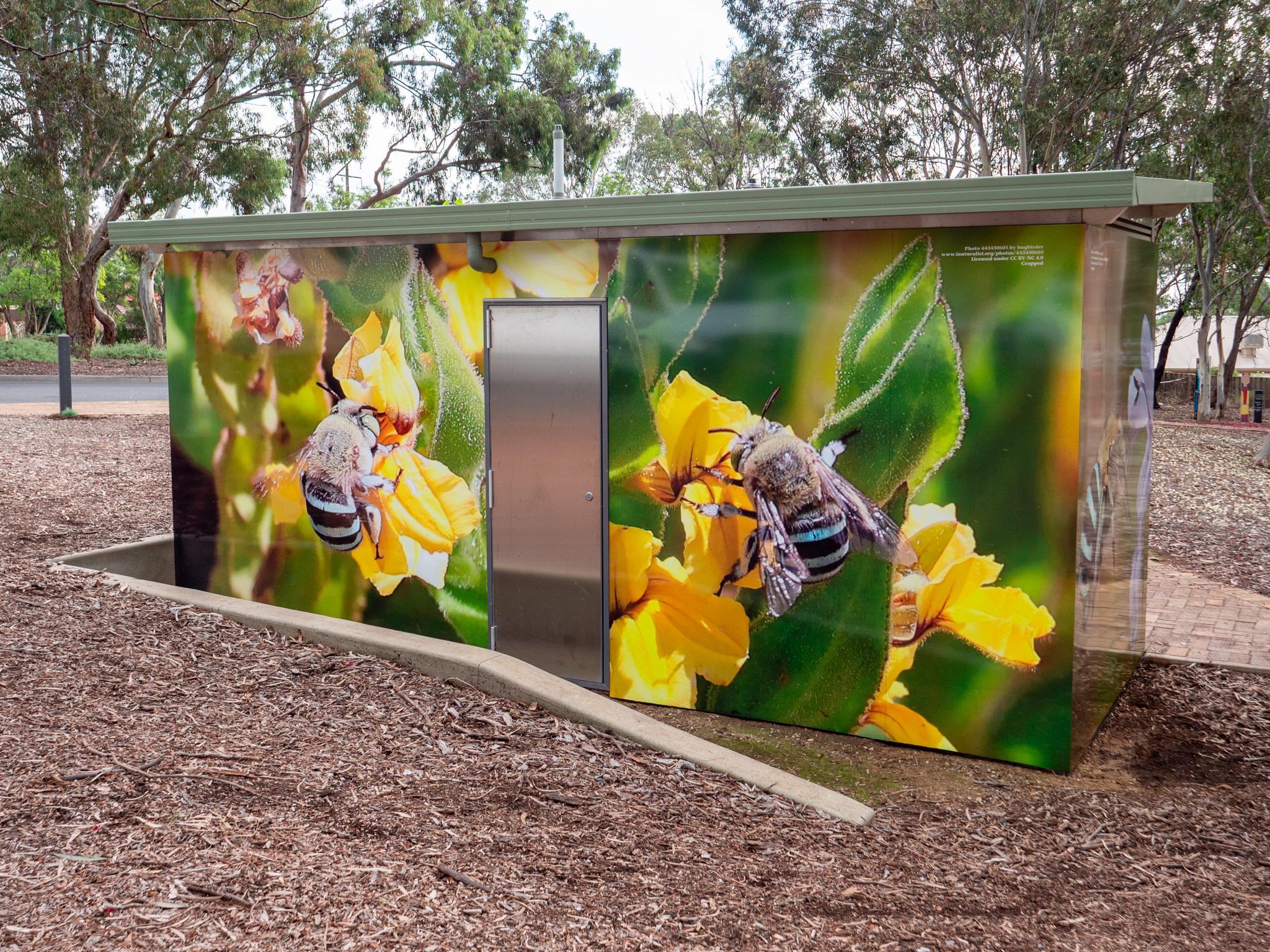
Visitors to Penfold Park may have noticed a colourful new addition to the public toilet block, featuring one of South Australia's most fascinating native pollinators the blue-banded bee.
The photographic wrap showcases the beauty of this remarkable insect while highlighting the important role native pollinators play in supporting healthy ecosystems across our city. Further installations are planned in the upcoming months to help beautify local parklands.
The blue-banded bee was selected as the subject to celebrate local biodiversity and encourage greater appreciation of the unique species that call Burnside home. While many people are familiar with European honeybees, Australia's native bees often go unnoticed despite their significant contribution to pollination.
Unlike European honeybees, blue-banded bees are capable of a specialised technique known as ‘buzz pollination’. By vibrating their bodies at a specific frequency, they can release pollen from flowers that other bees struggle to pollinate. This makes them particularly valuable for many native plants, as well as common food crops.
Interest in native bees is already growing within our community. Bee hotels have been installed at Kensington Park Reserve and within the Glenside development, providing habitat opportunities for local pollinators. The new toilet block wrap builds on this interest by creating an accessible and engaging way for residents and visitors to learn about these important insects.
The project also supports Council's commitment to environmental education and biodiversity conservation, raising awareness of native species and their ecological importance.
Now for some quick fun facts about the blue-banded bee. Did you know?
Blue-banded bees are more than just beautiful, they are highly effective pollinators.
Researchers from the University of Adelaide have found that blue-banded bees can improve the pollination of tomato flowers and may even help increase fruit size. They have also been observed visiting a wide range of edible plants, including eggplant, capsicum, watermelon, strawberry and pumpkin.
If you'd like to attract blue-banded bees to your own garden, consider planting some of their favourite native species. Dianellas and Goodenias are particularly popular with these bees and are regularly available through the City of Burnside's annual Local Native Plant Giveaway.
The new wrap at Penfold Park toilet block serves as a reminder that some of our most important environmental contributors are also among our smallest. By celebrating native species such as the blue-banded bee, we can help foster a greater appreciation for the natural world and the essential services these remarkable pollinators quietly provide every day.
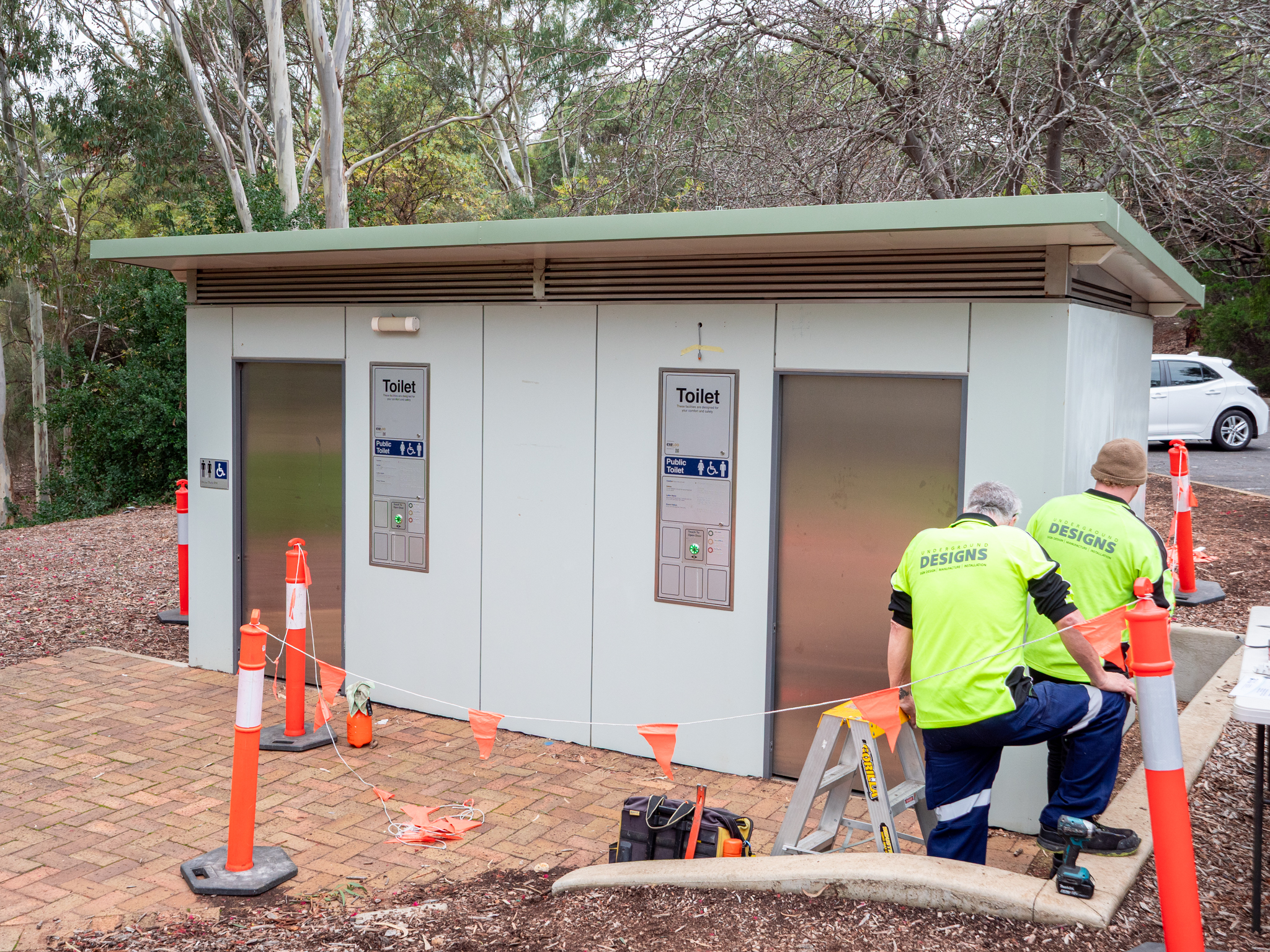 Before
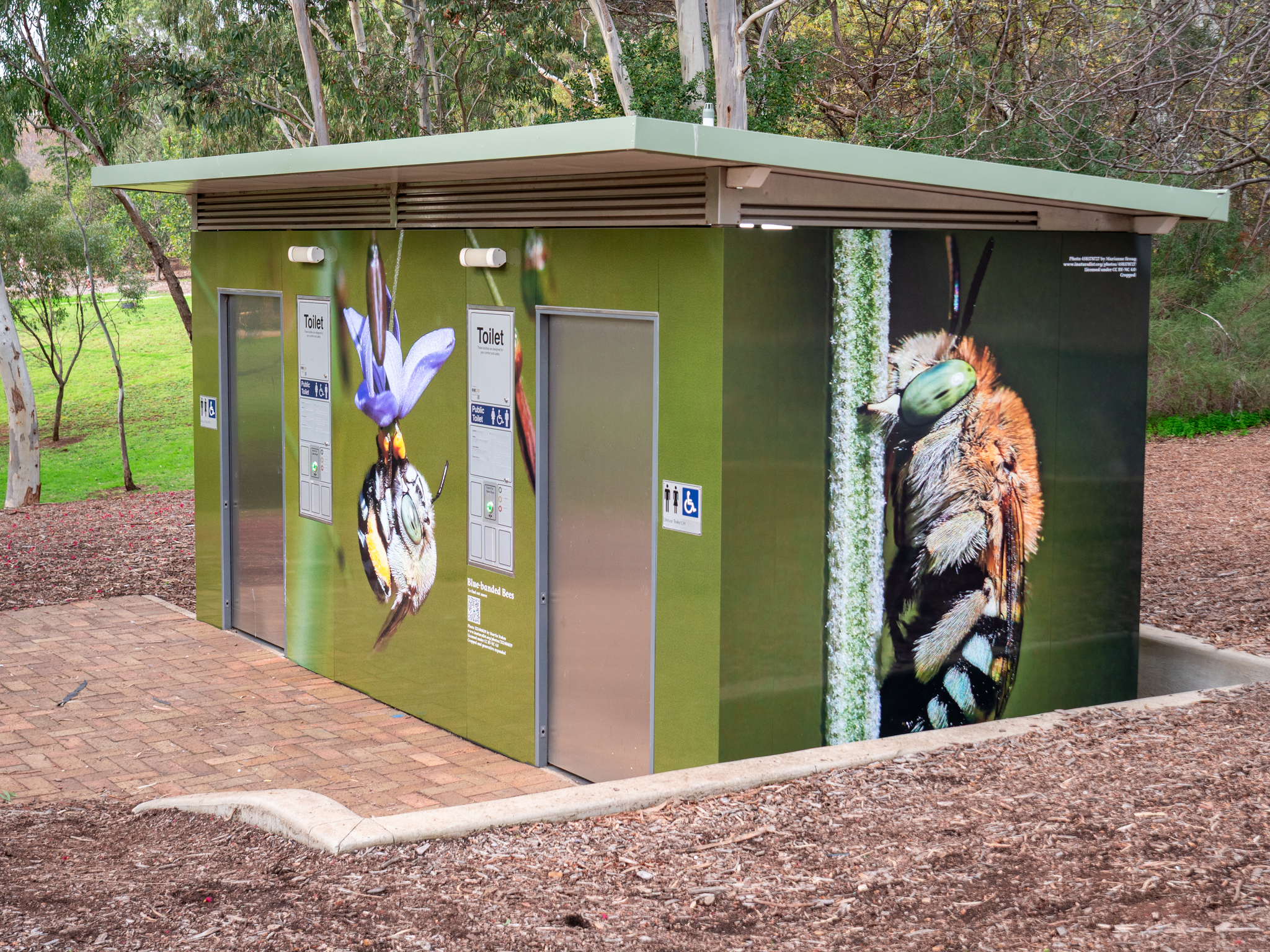 After
After