Select your language from the drop down menu.


Published: 3 June 2026.
Have you ever wondered why so many towns have a “High Street”?
The meaning of “high” wasn’t always about elevation. In Middle English, it meant importance or status, and was later applied to major roads. By the 17th century, “highway” was the term for public roads connecting settlements.
As towns developed, the High Street came to mean the main street where the most important shops and businesses were located and were the heart of community life.
When the village of Burnside established, High Street was its main street - so it likely took on the name for that reason: it was the centre of activity. Prior to 1860 the street was known as ‘Laughton’s Road’ after the owner of the nearby ‘Ivymeade’.
In 1859-60, Joseph Lockwood built the shop and a two-room house on the corner of High Street and Lockwood Road. From 1863, Lockwood operated a post office from the store and acted as an agent for the Registrar of Birth, Death and Marriages. The building was later extended, adding a second storey.
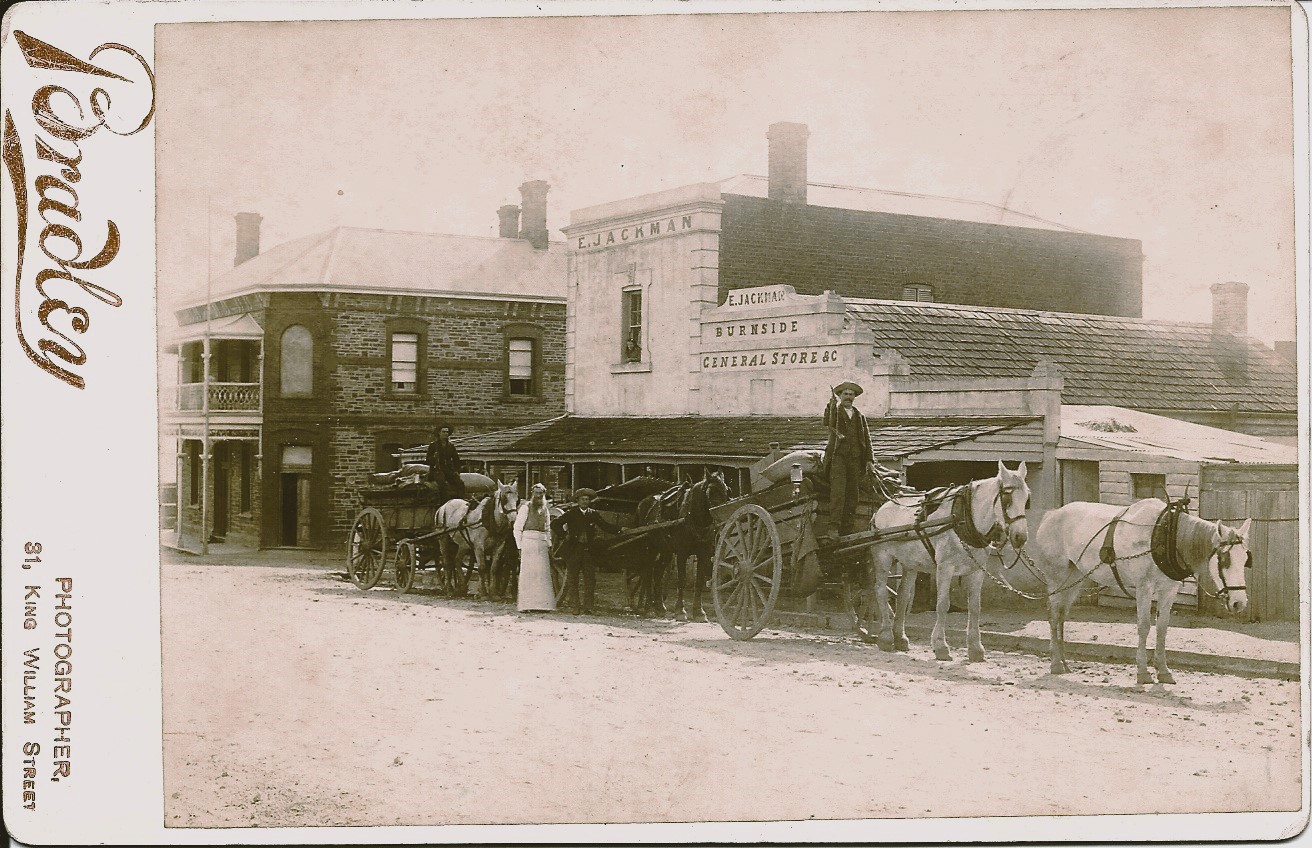
Photograph: General Store on High Street in Burnside, circa 1889. Burnside Local History Collection.



We've launched a fresh new home for engage.burnside. To continue receiving updates and taking part in our engagements, please register here, even if you had an account with us before.
Once registered, you can receive updates straight to your inbox, and be among the first to have your say on upcoming projects.